
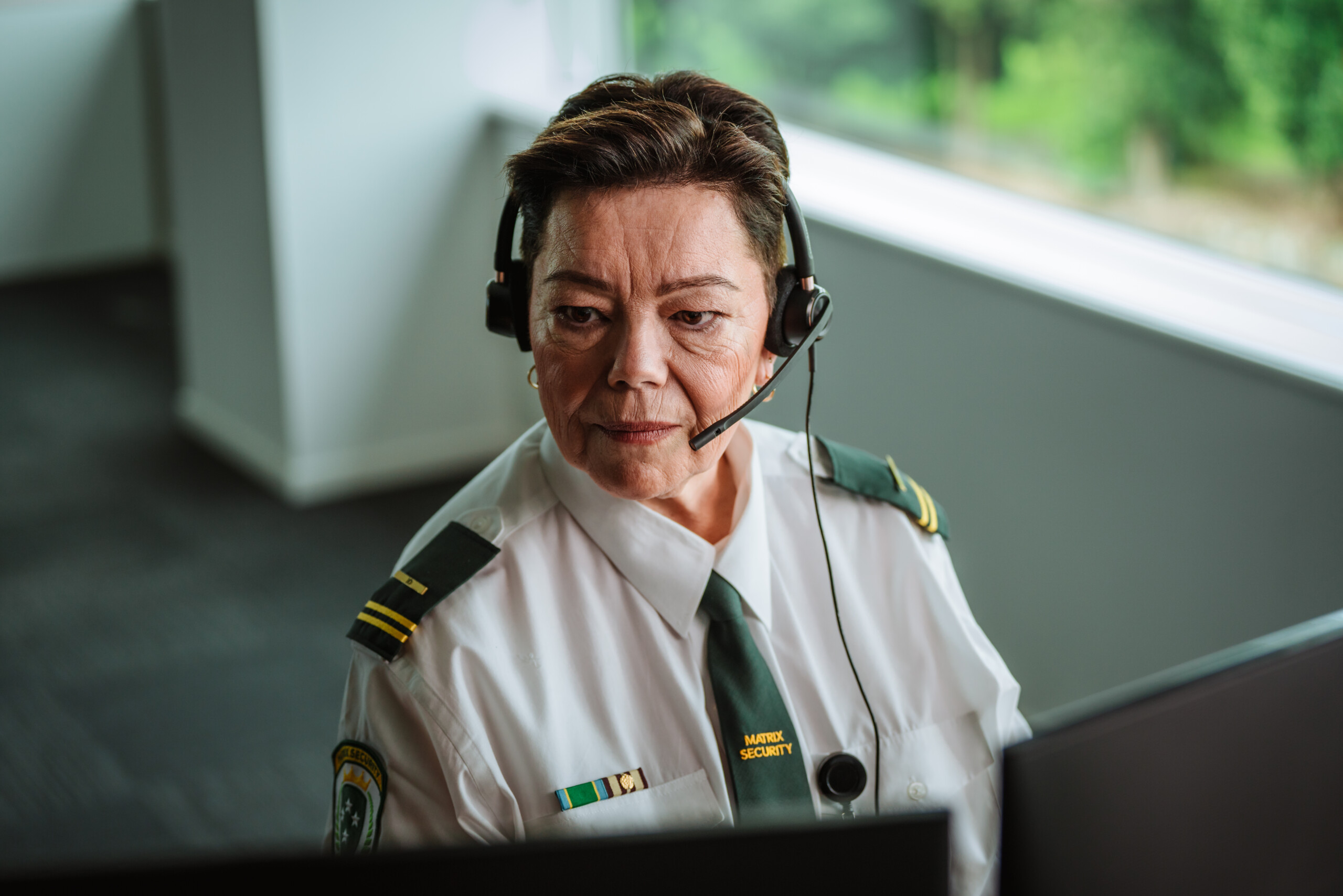
Back to base alarm monitoring connects your alarm system to a monitoring centre, where trained operators receive every signal and arrange a response, day or night. These monitoring centres are graded and inspected against New Zealand’s recognised industry standards, giving homeowners confidence that their alarm signals are handled to a consistent standard of care. Back to base alarm monitoring is one of the most established forms of alarm monitoring that homeowners rely on and understanding how it works may make it easier to choose a service that fits your home.
Here is what this guide covers:
- What Back to Base Alarm Monitoring Means
- How Back to Base Alarm Monitoring Works
- What Happens When Your Alarm Is Triggered
- Monitored vs Self-Monitored Alarms
- IP Monitoring vs Traditional Phone-Line Monitoring
- How Much Does Alarm Monitoring Cost in NZ?
- Why Choose Matrix Security
- Getting Alarm Monitoring for Your Home
What Back to Base Alarm Monitoring Means
A back to base alarm differs from a standalone siren in one important way. The signal reaches a monitoring centre, where a trained operator can verify what is happening and put your action plan into motion, rather than relying on volume alone to alert anyone nearby.
This matters most in the situations you cannot control, an empty street, a neighbour who is not home, or an alarm going off while you are at work or travelling. Monitoring puts a person into that gap from the first moment something is detected.
This guide covers how the signal travels, what an operator does with it, how monitored and self-monitored alarms compare, what monitoring costs, and how to choose a service that matches the way you live. The aim is straightforward, to help you understand exactly what you are paying for and feel confident your alarm is backed by trained people who respond when it matters.
How Back to Base Alarm Monitoring Works
A back to base alarm system works through a short, reliable sequence, with each step handled automatically until a person needs to make a decision.
- A sensor inside or around your home detects movement, forced entry, or another change it is set to watch for.
- Your alarm panel sends a signal to the monitoring centre using an internet connection, with a cellular backup if the main connection drops out.
- The monitoring centre receives the signal within seconds.
- A trained operator checks the signal against your account details and action plan, then decides what happens next.
A monitoring centre is the operations room behind your alarm, staffed every hour of every day, so a signal at 3am gets the same attention as one at 3pm. IP monitoring, the internet based connection between your panel and the centre, is now the standard way that signal travels, with cellular backup keeping the link open if your broadband goes down.
What Happens When Your Alarm Is Triggered
When a monitored alarm goes off, an operator at the monitoring centre verifies the signal first, then works through your account’s action plan to decide who to contact and what happens next. The steps typically look like this.
- The operator confirms the type of signal and checks it against any scheduled activity, such as your alarm being armed after hours.
- They follow your action plan, which usually starts with an attempt to contact you or another authorised person by phone.
- If contact cannot be made, or the situation calls for it, the operator arranges a response, such as dispatching a mobile patrol.
- The operator records the outcome and keeps your account updated throughout.
This is where monitoring changes the outcome. An alarm that only sounds locally depends on someone hearing it, recognising what it means, and knowing what to do next, all within the same few minutes that matter most. A monitored alarm removes that dependency. The moment a signal arrives, a trained operator is already working through your action plan, contacting you, and arranging a mobile patrol or emergency response if needed. You are kept informed rather than having to manage the situation yourself, from wherever you happen to be.
Monitored vs Self-Monitored Alarms
Self-monitored alarms send an alert straight to your phone through an app, and for some households, that level of direct control is exactly what they want. A professionally monitored alarm takes a different approach, adding a monitoring centre and trained operators into the chain. Both are genuine options, and the right one comes down to how you want alerts handled when they happen. The table below sets out how each works in practice.
| Monitored alarm | Self-monitored alarm | |
| Who responds | Trained operators at a monitoring centre | You, or whoever you can reach at the time |
| Availability | Around the clock, every day of the year | Depends on your phone being on hand and noticed |
| Reliability | Backed by IP monitoring with cellular backup | Relies on your home internet and phone notifications |
| Response options | Can arrange a mobile patrol or emergency services | Limited to what you can arrange yourself in the moment |
Both approaches can work well. The right choice comes down to whether you want to manage alerts yourself or have a monitoring centre act on them for you.
IP Monitoring vs Traditional Phone-Line Monitoring
Most monitored alarms in New Zealand connect through IP monitoring, sending signals over the same broadband connection you already use for the internet, rather than a copper phone line. As a result, a landline is no longer required to run a monitored alarm system.
This shift matters because copper landlines are being progressively retired across New Zealand. Chorus is working towards retiring copper in fibre areas, with customers moved to alternatives such as fibre, fixed wireless, and satellite, as outlined by the Telecommunications Forum’s copper retirement guidance. A monitored alarm system that still relies on a landline signal can be left without a working connection once that switch happens in your area.
Matrix Security’s residential IP monitoring service uses your existing broadband connection, with cellular backup in place if the internet drops out, so your alarm stays connected without depending on a landline at all. Moving an existing alarm to IP monitoring is generally straightforward, and it is worth checking with your provider before your area’s copper switch-off date arrives.
How Much Does Alarm Monitoring Cost in NZ?
Alarm monitoring in New Zealand typically costs between $30 and $60 a month, depending on the level of service and the response options included. A few factors affect where your monthly cost lands.
- The type of connection; a plan with cellular backup alongside IP monitoring can cost slightly more than a broadband only connection.
- The response options included; a plan with mobile patrol dispatch generally costs more than monitoring alone.
- The number of zones and sensors your system covers.
- Whether monitoring is bundled with a new alarm installation or added to an existing system.
Monitoring plans usually include 24-hour signal monitoring and access to a dispatched response when needed, though the specifics vary between providers. These figures are indicative, so it is worth getting a quote based on your own home and needs.
Why Choose Matrix Security
Matrix Security operates its own monitoring intelligence centre and response service across New Zealand, rather than outsourcing to a third party. That means the operators who answer your alarm signal are part of the same team that understands the response options available in your area.
Every Matrix Security account is set up with a clear action plan, so operators know exactly who to contact and what to do the moment a signal arrives. IP monitoring with cellular backup keeps your alarm connected, and mobile patrol dispatch is available where a physical response is needed. You can read more about how monitoring and response work together on the alarm and response page.
If you are away from home more often than not, it is also worth reading Neighbourhood Support New Zealand’s guide to keeping your home safe while travelling, which pairs well with a monitored alarm as part of an overall approach to home security. New Zealand Police also publish general home security advice worth reviewing alongside your monitoring setup.
Getting Alarm Monitoring for Your Home
A back to base alarm delivers real protection once it is connected to people who can act on it. Monitoring turns a sensor and a siren into a coordinated response, with trained operators verifying every signal and following your action plan around the clock.
If your current alarm is not monitored, or you are setting up security for a new home, getting alarm monitoring NZ homeowners can rely on is a straightforward next step. Contact Matrix Security for a monitoring quote tailored to your home.